Creating Development Paths for Designers at Different Levels
Designers at every level need room to grow in ways that fit their goals. Development paths, tailored coaching, and a global mentorship program spanning 175+ designers created more opportunities to practice, find support, and learn from peers.

Sony Interactive Entertainment / PlayStation
UX Manager, mentor, and mentorship-program lead
7–9 designers, with apprenticeship support
Internal mentorship program spanning 175+ designers globally
FY25 100% growth-plan coverage
Different levels required different development support
My team included designers at different stages of their careers. Apprentices needed structured opportunities to build foundational skills. More experienced designers needed support developing autonomy, communicating their reasoning, or influencing direction through other people’s work.
A common set of expectations was useful, but it did not tell each person what to practice next. I developed a curriculum with named focus areas and used individual plans to connect those areas to the designer’s work.
I began the year with self-assessments and reviewed the previous year’s evaluations and 360 feedback with designers. That gave our conversations a starting point grounded in their own perspective and the feedback around them. It also helped us look for patterns rather than respond only to the latest project.
Turning development areas into practical coaching
The curriculum covered accuracy, organization and cross-functional collaboration, strategy and problem solving, pace, quality, and autonomy. As additional needs emerged, I added confidence in collaboration meetings, influencing design direction, presentation, and navigating ambiguity.
I varied the support by level. For an apprentice, that included curated learning paths. For a mid-level designer, autonomy meant examining focus, prioritization, attention to detail, and adaptability. With a senior designer, I worked on explaining the process behind the work. With a staff lead, the emphasis shifted toward giving other designers a clear vision and helping them develop the direction.
These were different applications of the curriculum, not a single course everyone completed in the same order. My role was to help each designer identify the behavior or judgment they needed to practice and connect that development to their responsibilities.

Making support consistent enough to use
For designers who needed more sustained support with foundational habits, I held weekly one-hour development conversations over at least six months. I used questions to help them work through the issues themselves, with attention to communication as well as design execution.
I also checked whether development was visible outside our 1:1s. Short conversations with stakeholders focused on one or two questions about what was going well and what had changed. The feedback included clearer communication and more understandable presentations of iterative work.
This gave coaching a connection to everyday collaboration. After about four months of the structured development sessions, stakeholders began noticing changes. One designer was later requested for a high-visibility project, while another regained consistency. Those were individual outcomes from sustained support, not a promotion rate or a result for the entire team.
Supporting apprentices and their mentors
I onboarded the company’s first UX design apprentice and a Year Up apprentice. The support included curated learning paths, repeated skills self-assessments, morning stand-ups, and a written mid-cycle review.
One assignment gave an apprentice a bounded piece of real product work: rebuilding a landscape storage-management screen in Figma. I assigned it as a learning exercise alongside design-system fixes and open accessibility issues. It connected tool practice to material the team was working with.
Two senior designers also served as mentors, and I coached them on how to mentor. That gave the apprentice access to practical expertise while creating a development opportunity for the mentors themselves.
The first UX design apprentice was later hired. The later apprentice’s conversion was still unresolved in the source record, so I do not present apprenticeship support as a guarantee of employment or combine the two into a hiring rate.
Extending access across the organization
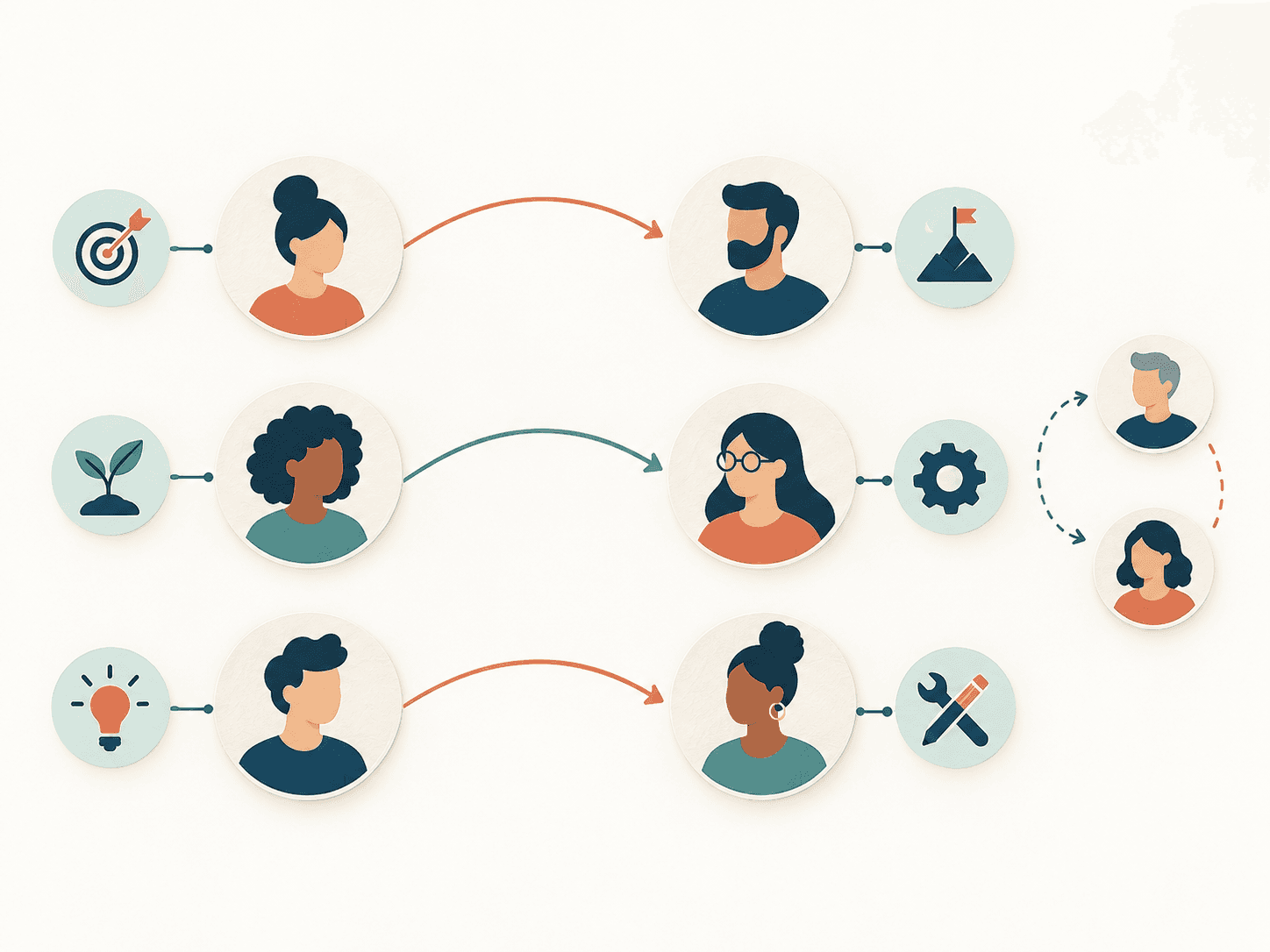
Beyond my direct team, I led an internal mentorship program spanning 175+ designers globally. I hand-paired mentees with mentors according to the mentee’s goals and the mentor’s expertise.
That matching was the core contribution: looking beyond a job title to connect what a mentee wanted to develop with relevant expertise. The program’s 175+ designers describe its global reach, not the number of people I coached individually.
I also mentored designers outside my team directly. In one year, three of those designers received high performance marks or were promoted. Separately, I helped a cross-team mentee move from UX writing into UX design after a five-year effort to make that transition. She later led an off-console PS Plus subscription-tier selector. The product work was hers; my contribution was the development support behind the career transition.


What the work established
The team reached 100% growth-plan coverage in FY25. The broader mentorship program created connections across a global design organization, while apprentices and experienced designers received support suited to their development needs.
Those outcomes came from several related efforts over time. My contribution was to provide the structure, matching, and sustained coaching that made development part of the work, while recognizing that designers owned their learning and career progress.